ROBOTICS
Robotics is a branch of engineering that involves the conception, design, manufacture, and operation of robots. This field overlaps with electronics, computer science, artificial intelligence, mechatronics, nanotechnology and bioengineering.
🔻WHERE DID THE WORD 'ROBOT' COME FROM?
The word 'robot' was coined by the Czech playwright Karel Capek (pronounced "chop'ek") from the Czech word for forced labor or serf. Capek was reportedly several times a candidate for the Nobel prize for his works and very influential and prolific as a writer and playwright. Mercifully, he died before the Gestapo got to him for his anti-Nazi sympathies in 1938.
The use of the word Robot was introduced into his play R.U.R. (Rossum's Universal Robots) which opened in Prague in January 1921. The play was an enormous success and productions soon opened throughout Europe and the US. R.U.R's theme, in part, was the dehumanization of man in a technological civilization. You may find it surprising that the robots were not mechanical in nature but were created through chemical means.
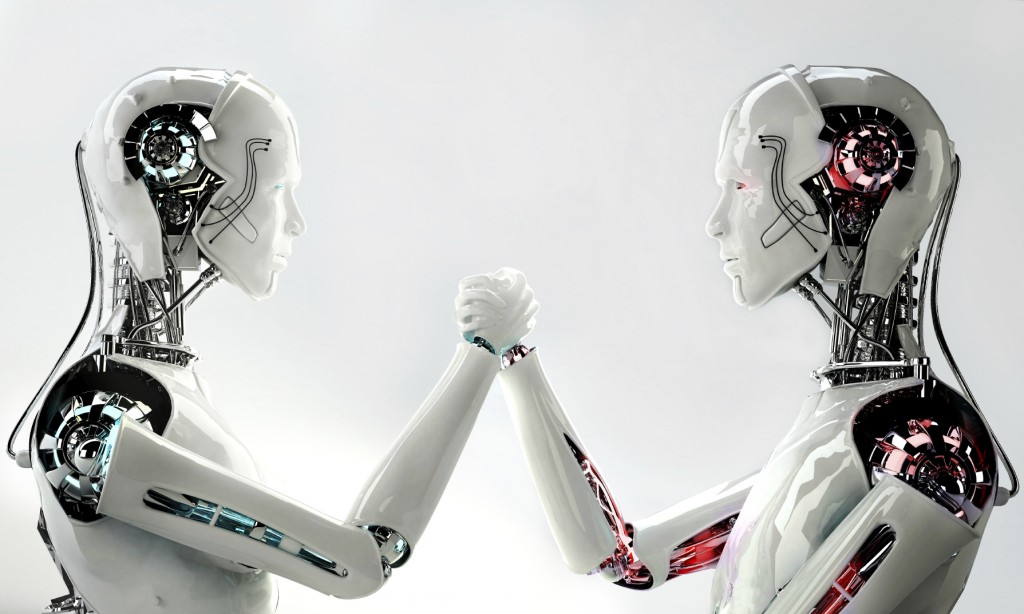

The term 'robotics' refers to the study and use of robots. The term was coined and first used by the Russian-born American scientist and writer Isaac Asimov (born Jan. 2, 1920, died Apr. 6, 1992). Asimov wrote prodigiously on a wide variety of subjects. He was best known for his many works of science fiction. The most famous include I Robot (1950), The Foundation Trilogy (1951-52), Foundation's Edge (1982), and The Gods Themselves (1972), which won both the Hugo and Nebula awards.
The word 'robotics' was first used in Runaround, a short story published in 1942. I, Robot, a collection of several of these stories, was published in 1950. Asimov also proposed his three "Laws of Robotics", and he later added a 'zeroth law'.
👉LAW
ZERO:A robot may not injure humanity, or, through inaction, allow humanity to come to harm.
👉LAW ONE:A robot may not injure a human being, or, through inaction,
allow a human being to come to harm, unless this would violate a higher order
law.
👉LAW TWO: A robot must obey orders given it by human beings, except
where such orders would conflict with a higher order law.
👉LAW THREE:A robot must protect its own existence as long as such
protection does not conflict with a higher order law.
Recuperado de :http://whatis.techtarget.com/definition/robotics
Recuperado de:http://www.cs.cmu.edu/~chuck/robotpg/robofaq/1.html

No hay comentarios:
Publicar un comentario